A curly haircut starts differently, and for a first-timer in Tega Cay the difference can be unsettling: the stylist may want to cut your hair dry, before any washing, picking up one curl at a time while you sit there wondering when the real haircut begins. That is the real haircut. Curly hair cut wet and combed straight is being measured in a state it never actually lives in, and the results — too short, uneven once dry, with a shelf where a layer was cut blind — are why curly clients learn to be particular about who holds the scissors.
Here is what a curl-focused appointment looks like, step by step, and why each step exists.
Why curls break the usual method
Wet hair stretches. Combed-out curls stretch further and unevenly, because each curl pattern pulls out to a different length. Cut a wet, combed head to a perfectly even line and it dries into an uneven one, shorter wherever the curls are tighter. Then there is shrinkage: curly hair can dry several inches shorter than it hangs when wet, with the exact amount varying across one head. A stylist cutting dry, in the hair's natural state, sees the true length, the true shape, and each curl's individual behavior at the moment of cutting.
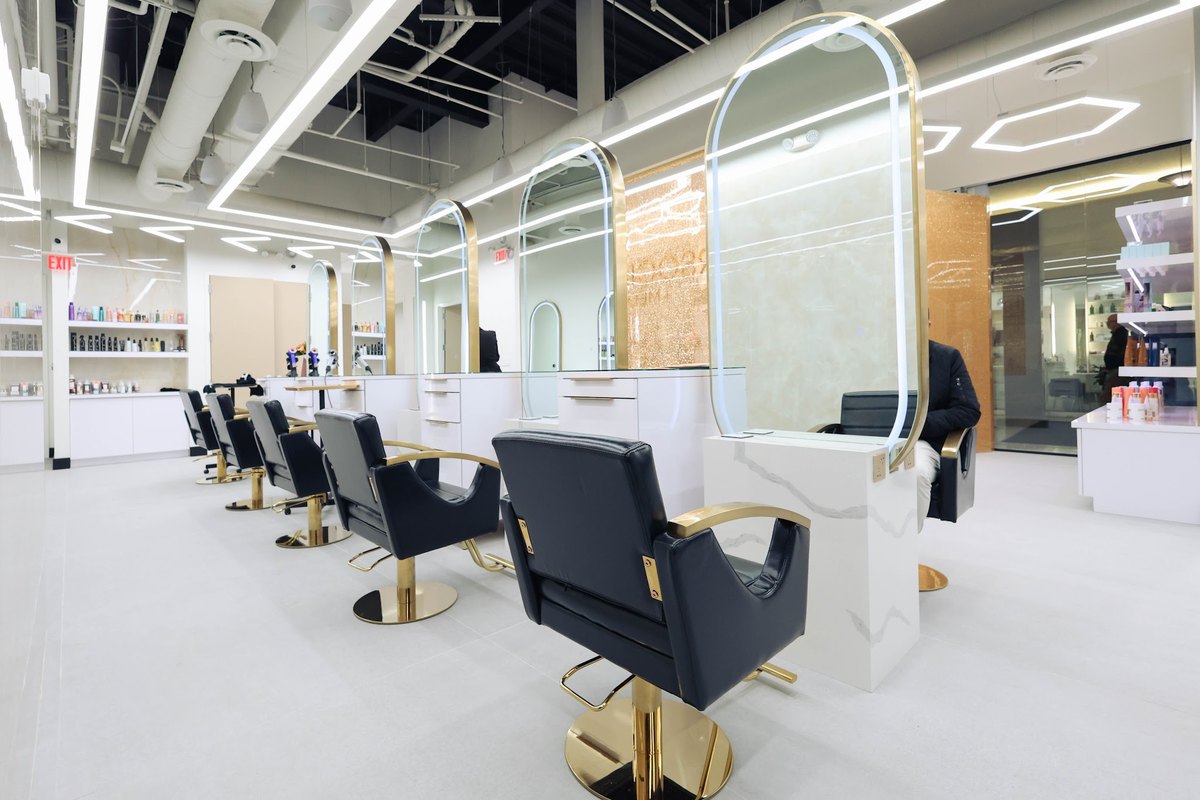
Curl-by-curl cutting takes that logic to its conclusion. Rather than cutting in combed sections, the stylist selects individual curls or small clusters and trims each where it needs it, shaping the overall silhouette the way a sculptor works, checking the whole shape constantly, not just the section in hand.
Your first curl appointment, step by step
- Arrive with your hair down, dry, and styled as usual. The stylist needs to see your real curl pattern, not a ponytail's aftermath or a blowout. Come with minimal heavy product so the natural pattern reads clearly, and skip the hat and the topknot on the way.
- Talk shape before scissors. Discuss length in terms of where curls should land dry, at the shoulder, below the jaw, and bring photos of curly results, not straightened ones. This is also when shrinkage gets estimated for your pattern.
- The dry cut. Working through the head curl by curl or in small clusters, the stylist trims and shapes while the hair hangs naturally, adjusting for the tighter and looser zones every curly head has.
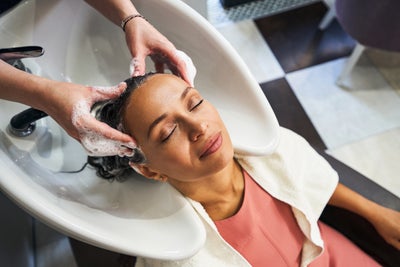
- Wash and condition at the bowl. With the shape set, the hair is cleansed and conditioned, and the stylist will usually demonstrate the wash technique that suits curls, gentle cleansing, generous conditioner, and detangling while conditioned.
- Styling, taught not just done. Product goes onto wet hair, curls are encouraged by scrunching or finger-coiling, and drying happens by air or diffuser on low heat. A good first appointment includes the lesson, because your home routine decides how the cut looks on day ten.
- The dry check. Once dry, the stylist inspects the shape in its final state and fine-tunes any curls sitting out of line. This last pass is a feature of the method, not a correction.
Finding a stylist who knows curl
Ask directly whether they cut curly hair dry and curl by curl, and whether they wear or specialize in textured hair themselves. Look for curly results in their photos, worn curly, not blown straight for the picture. A stylist who asks you to come in straightened, or who reaches for a comb and spray bottle to pull everything taut as a first move, is signaling a straight-hair method regardless of what the booking said. At Full Circle Salon, saying your hair is curly when you book helps the salon match you with the right approach from the start.
Between appointments
Curly cuts grow out more forgivingly than precise straight styles, because the shape is organic rather than geometric. Most curly clients land on trims every three to four months, sooner if ends tangle and split. At home, protect the pattern the cut created: sleep on satin, refresh with water and a little product rather than rewetting fully, and keep hands out of dry curls during the day, the handling is what separates a good curly cut from a frizzy one by afternoon.
Common questions
Should I straighten my hair before a curly cut?
No. Come with it dry, down, and in its natural pattern with light product. The stylist needs to see each curl as it behaves in real life to cut it correctly.
What is shrinkage and how much should I expect?
Shrinkage is the difference between wet, stretched length and dry, curled length. It varies by pattern, from a couple of inches to much more on tight coils, and your stylist will estimate yours before cutting.
Why does the wash come after the cut?
Because the shape is set while the hair is dry and natural. Washing first would stretch and disguise the curl pattern the cut depends on seeing.
Photos in this guide are representative stock images.
← All guides from Full Circle Salon← Back to Full Circle Salon